TIR HALEN
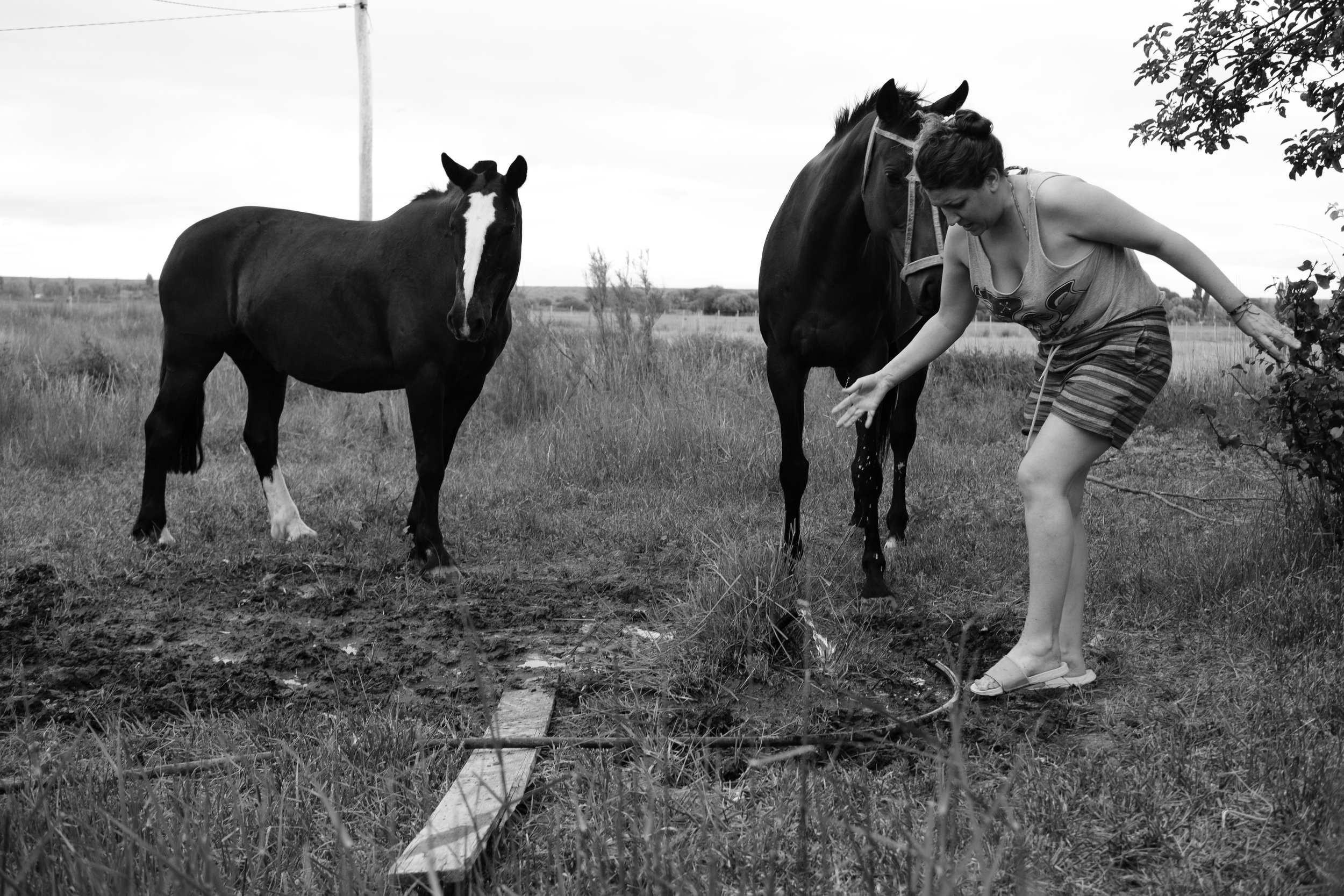
Shot in Chubut Province, Argentina and North Wales .
An exploration of the relationship between two nations and the contested interpretations of their shared colonial past.
In 1865, 158 settlers left Wales with the intention of establishing a Welsh-speaking colony that would be devoid of the English language in the hope that the Welsh language and culture would have an environment to survive. The settlers felt that their way of life and religious traditions were being diluted due to English colonization. They were sailing to the desert province of Chubut in Argentina. The Argentinian government encouraged Anglo-Saxon Europeans to populate Southern Patagonia to create their idealised ethnic nation and settle on Indigenous lands. When the settlers arrived aboard the ship Mimosa, they discovered that the landscape consisted of dry scrubland. Few of the settlers were farmers, and many died over the years. Others resorted to eating wild plants due to numerous crop failures.
The settlers were helped after establishing a relationship with the Indigenous Tehuelche people who advised them on how to survive on the land. In 1885, the Argentinian government implemented a genocidal campaign against the Indigenous Tehuelche and Mapuche tribes and The Conquest of the Desert resulted in the decimation of the population. Many were confined in concentration camps, sent to the army or forced into domestic slavery. The Settlers didn’t mount an effective protest to the conquest and actively benefited from the campaign through increased land claims. The Welsh colony was eventually assimilated into the Argentine Nation. The Welsh language was given secondary status in favour of Spanish during education and the dream of creating a Welsh speaking nation in the desert was dead.
Today, around 5000 Welsh speakers are reported to be living in Chubut. The idea of nationhood didn’t survive, and the province is a testament to Argentina and Wales’s troubled shared history. A fable of friendship is widely acknowledged as having existed between the Welsh and the Indigenous tribes. How that friendship ended and how the colonised eventually morphed into colonizers is rarely noted or evaluated in mainstream Welsh discourse.
This project explores the contentious history with a contemporary and decolonial lens in order to challenge dominant narratives surrounding the Welsh settler colonial mission. Welsh culture as a whole has benefited from portraying its settler colonial mission as unproblematic. By muddying the aesthetic distinction between the two nations in the imagery, a narrative bridge is created to confront the history of Welsh complicity in Indigenous genocide.